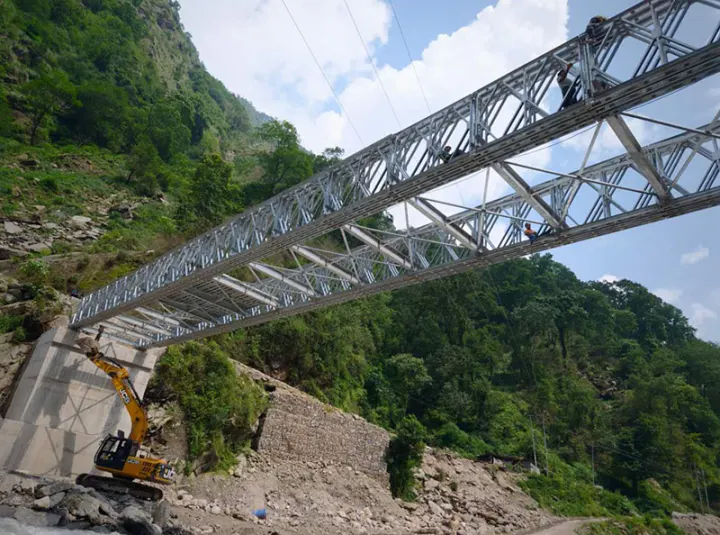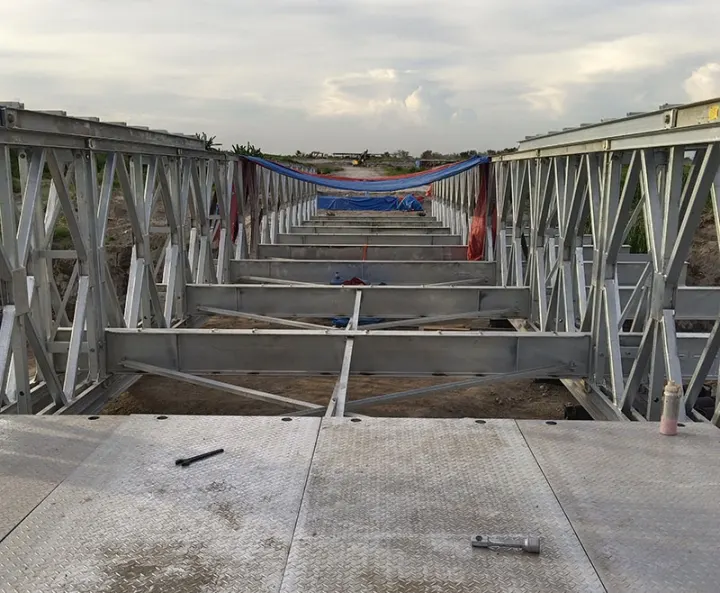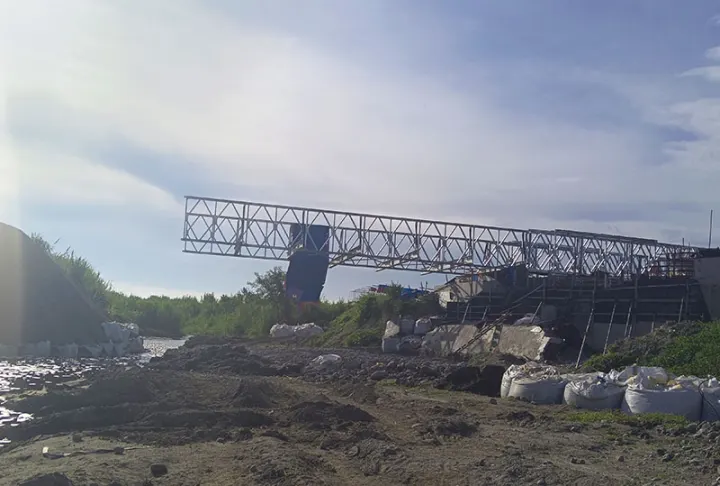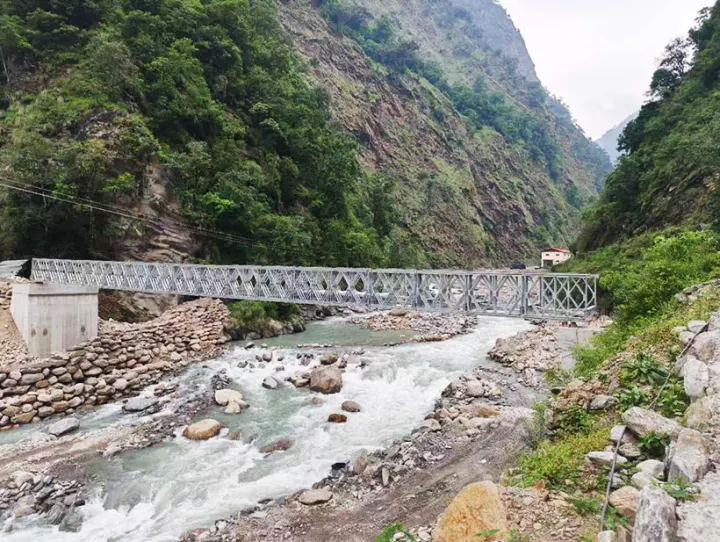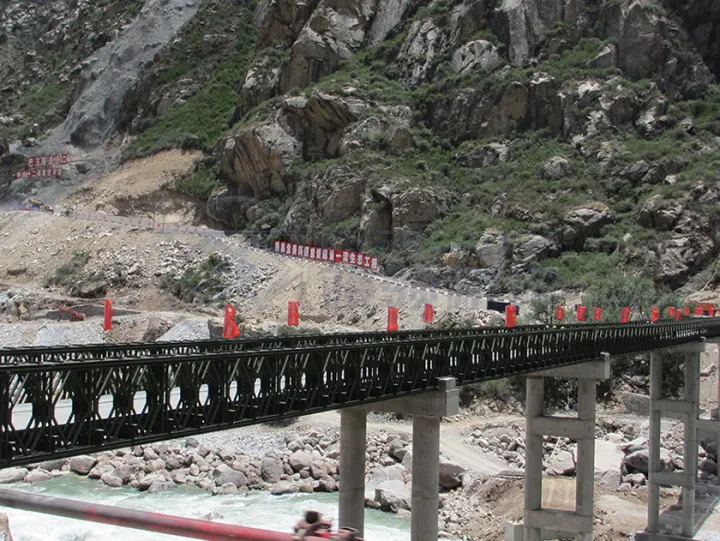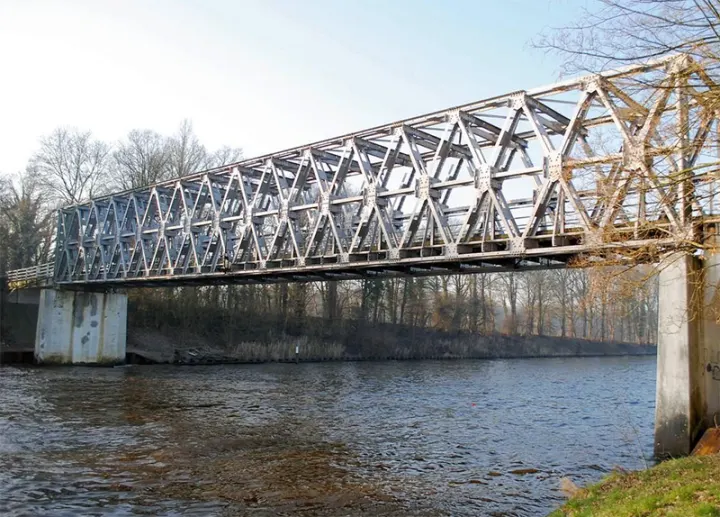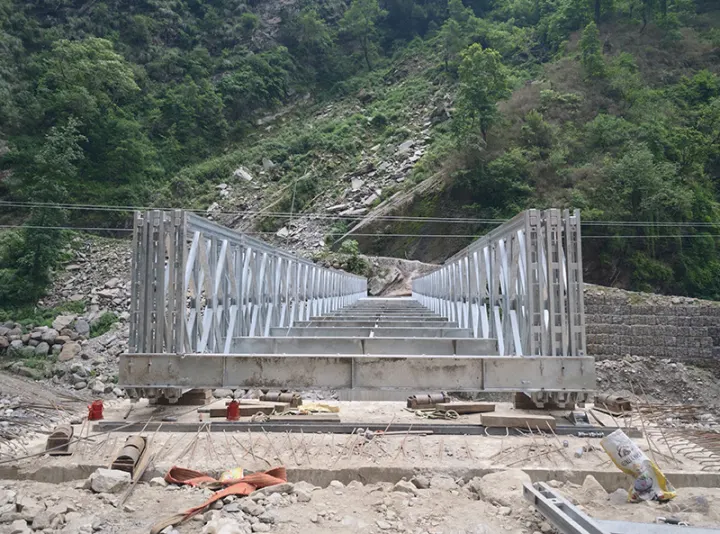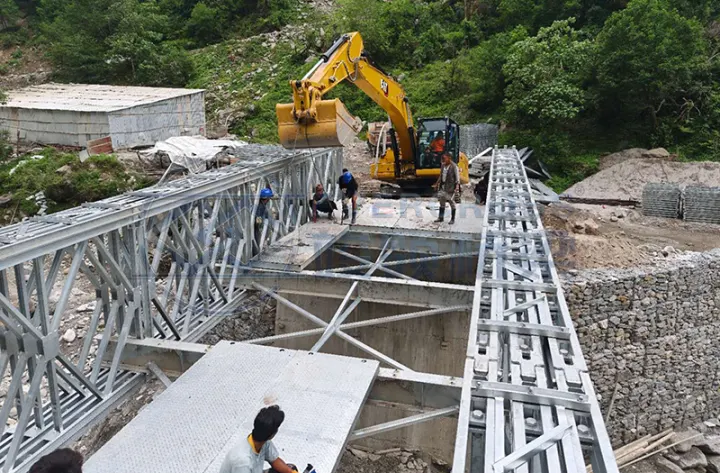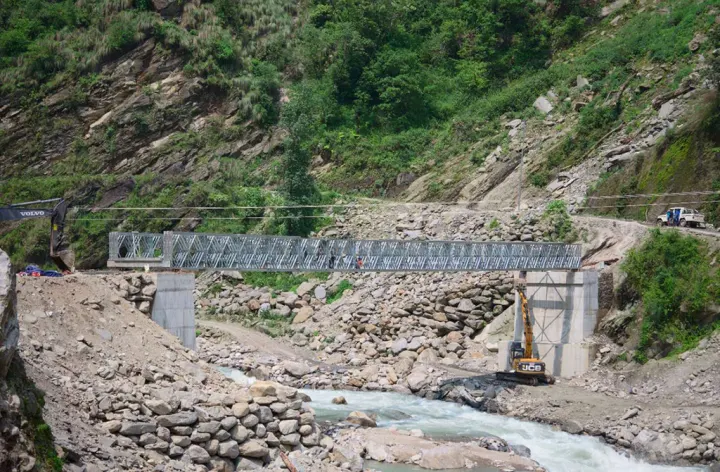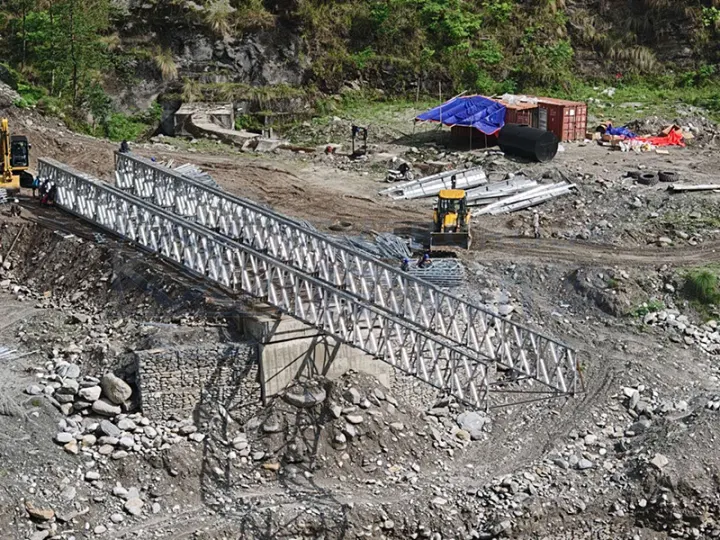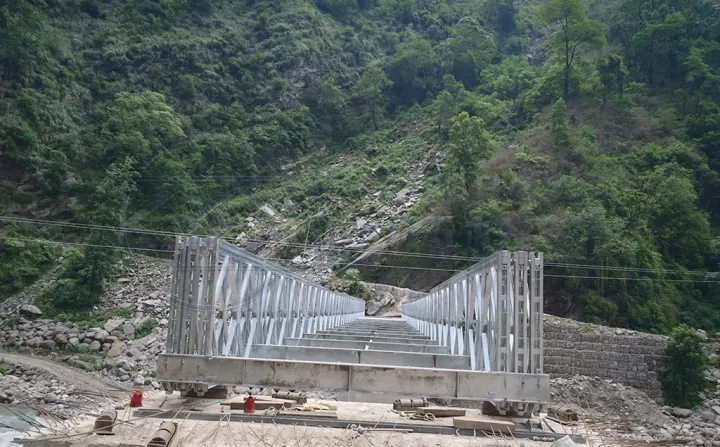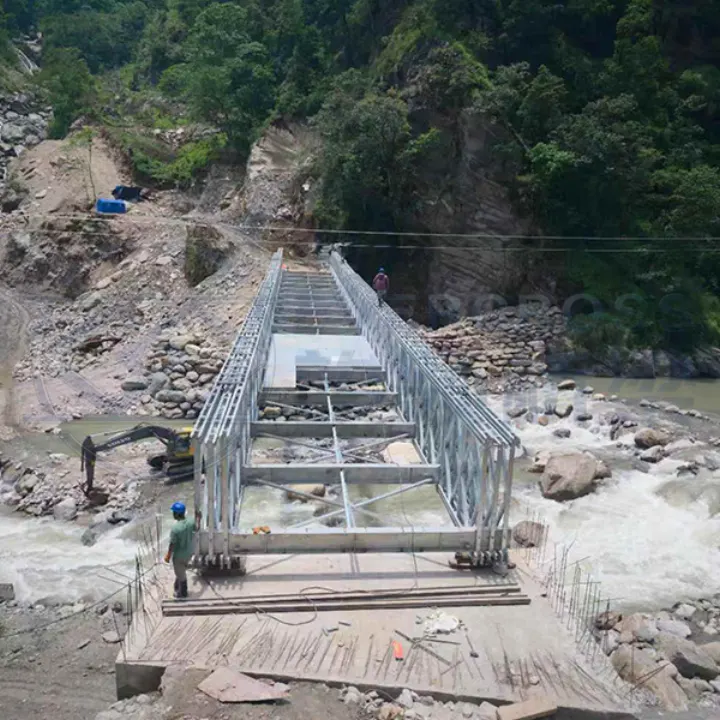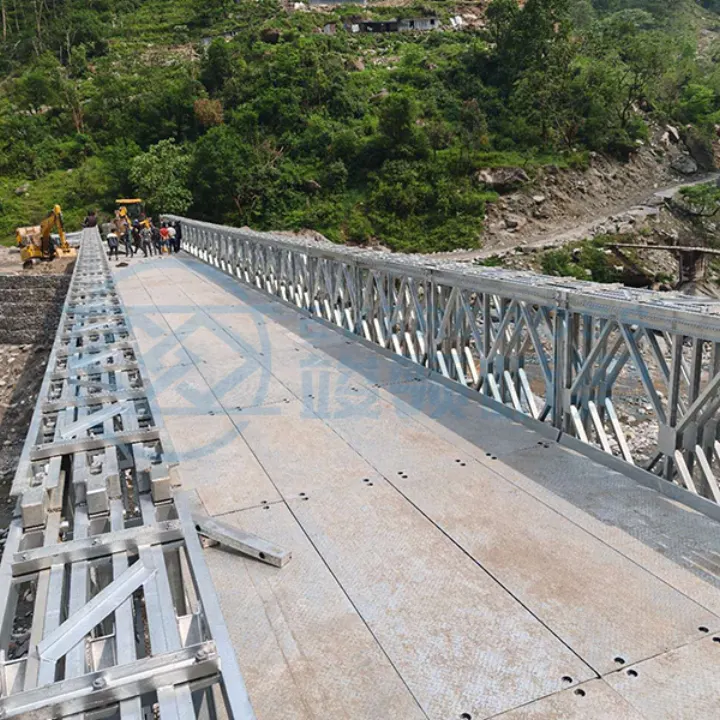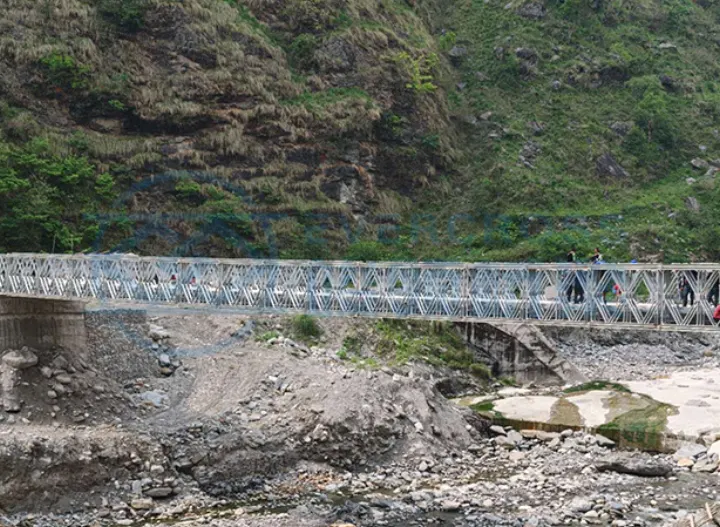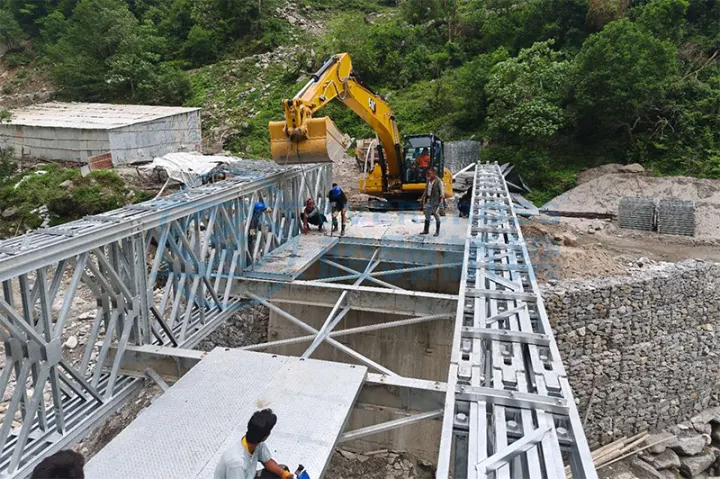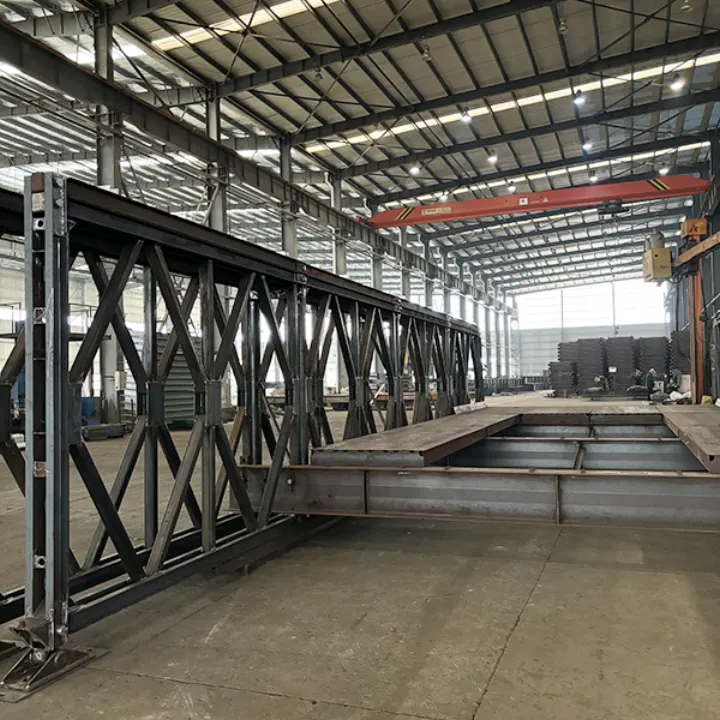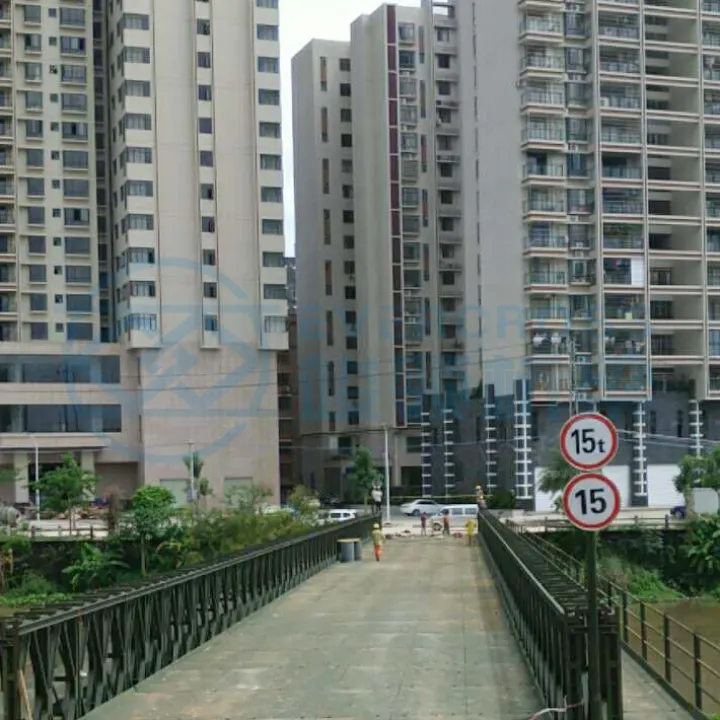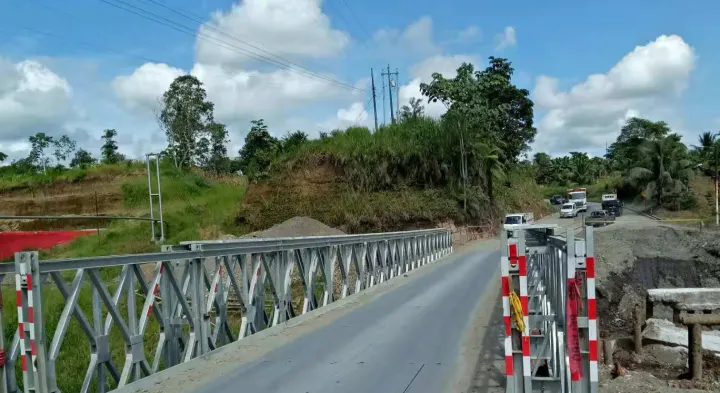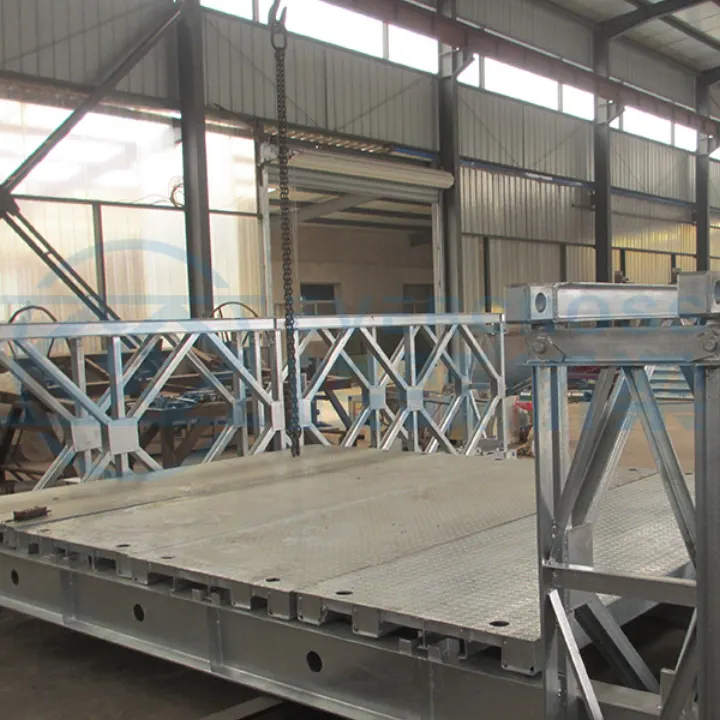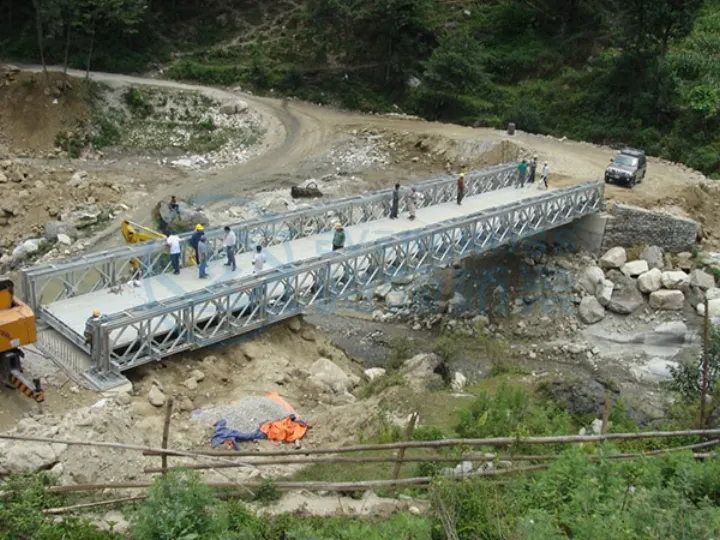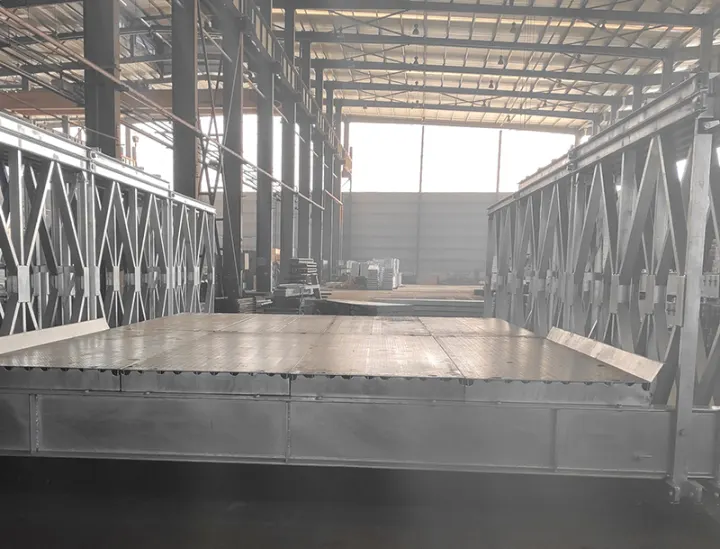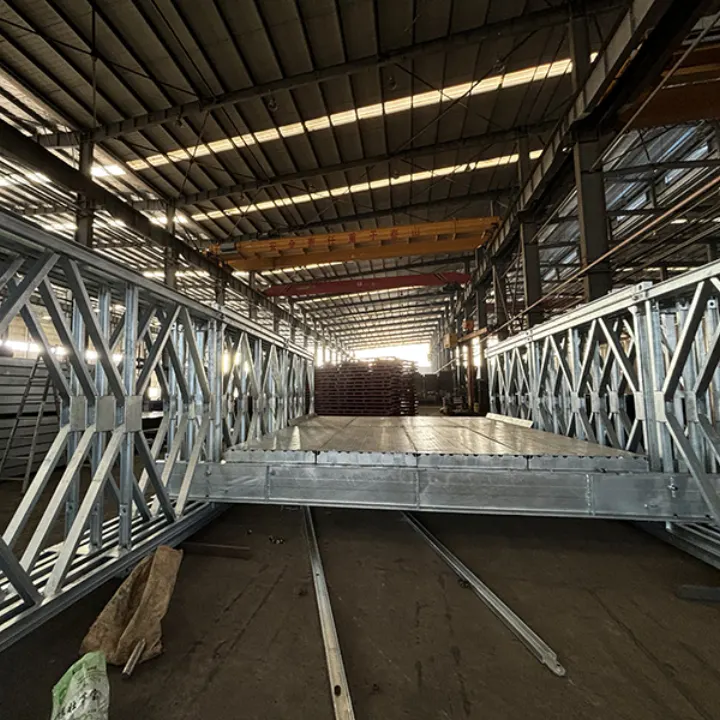
Modular steel bridges are sold on speed, but speed is a system property rather than a product property. The panel design, the joint detail, the launch nose, the lifting points and the crew training all have to line up before a bridge goes up in days instead of months.
The three families and what separates them
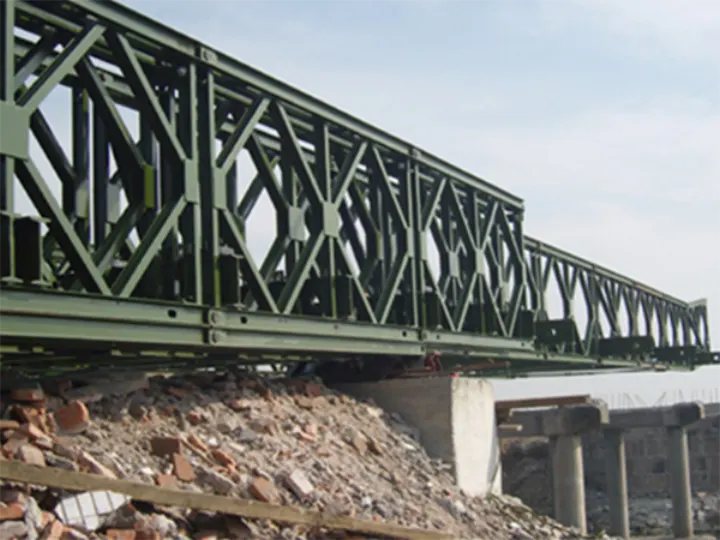
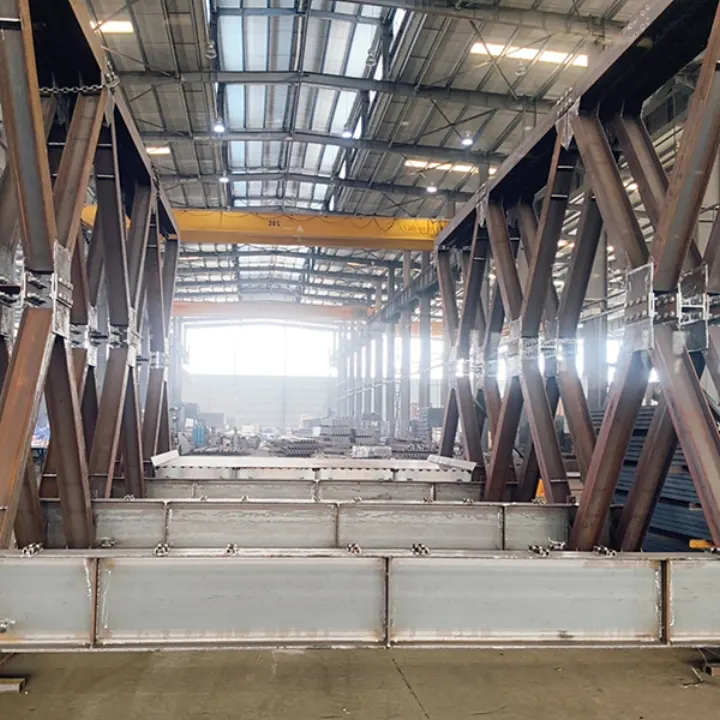
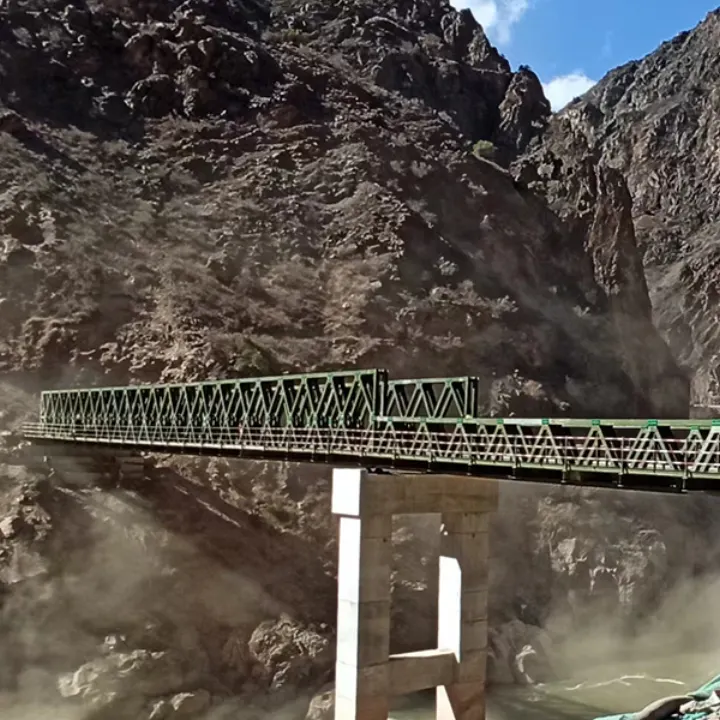
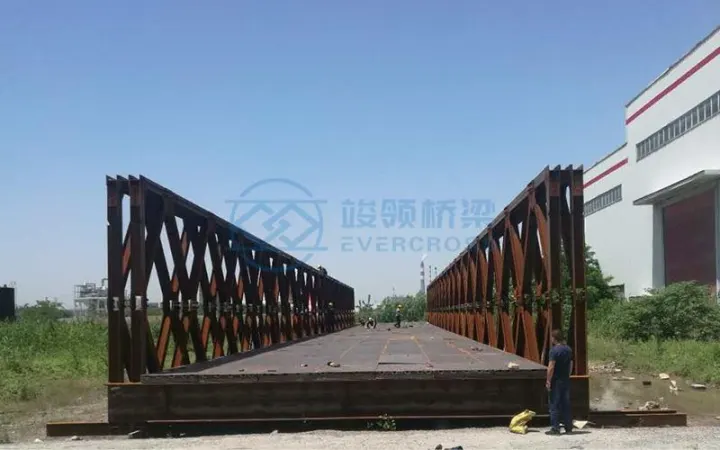
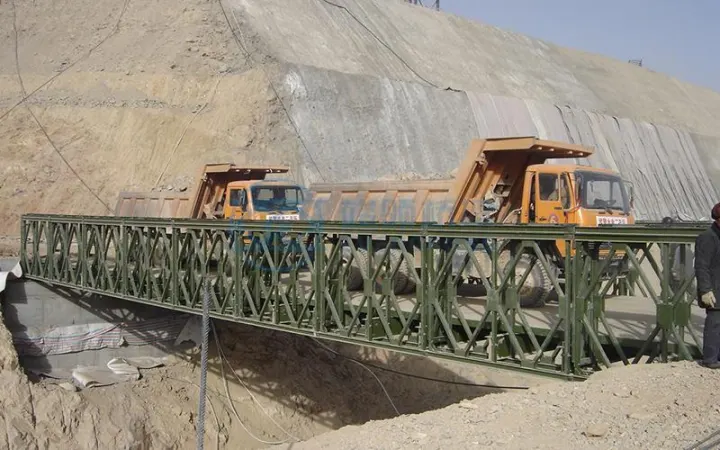
Panel systems (Bailey and its derivatives) use bolted truss panels in 3.05 m modules and are the cheapest way to span 20–90 m. Modular girder systems use welded box or plate girders in transportable lengths and suit wider roadways and heavier load classes. Compact and Delta-type systems sit between the two: deeper panels, fewer connection points, faster erection per metre. Choosing the wrong family is the single most expensive mistake in rapid deployment — a panel system pushed to 100 m needs so many trusses that erection time and bolt count explode.
Erection time is mostly about connections
Every bolted connection costs seconds and every second is multiplied by the number of bolts. A 60 m double-lane Bailey bridge carries several thousand bolts. That is why crews count “bolts per metre” as a design metric, why pinned connections are preferred on military systems, and why the launch nose — the sacrificial truss section that leads the bridge across the gap — is often the difference between a one-day and a three-day job.
Launching without access to the far bank
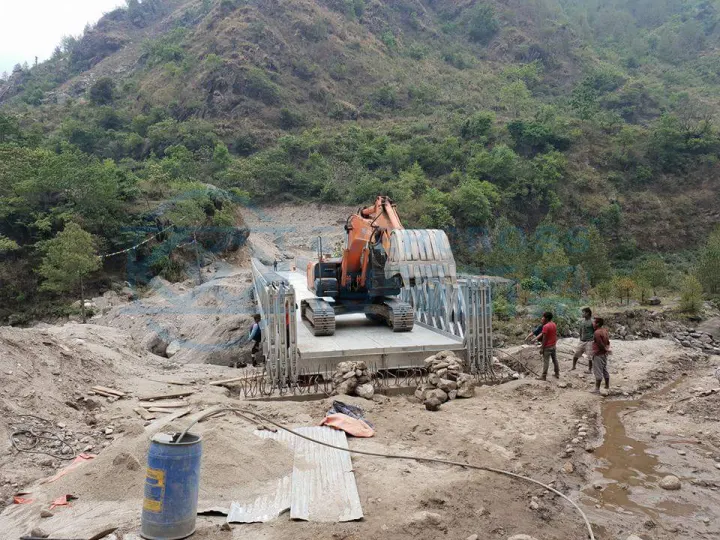
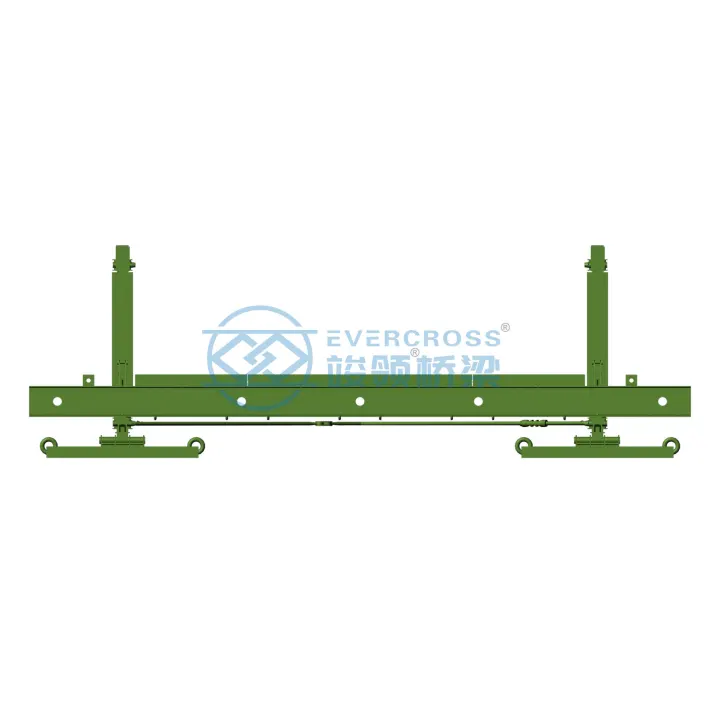
Cantilever launch with a nose is the standard method when the gap cannot be crossed. It requires a balancing counterweight, a launch roller at the near abutment, and a design check for the cantilever case, which is often more demanding than the in-service case. Hand-launch, winch-launch and vehicle-launch each impose different temporary stresses — the temporary condition, not the permanent one, governs the panel count in many projects.
Training is part of the product
A modular bridge delivered without crew training is a stack of steel. Two to three days of on-site instruction — panel handling, bolt torque, launch sequence, safety during cantilever — is what turns a delivery into an installed bridge. Buyers who skip it usually pay for it in erection delays or, worse, in a failed launch.