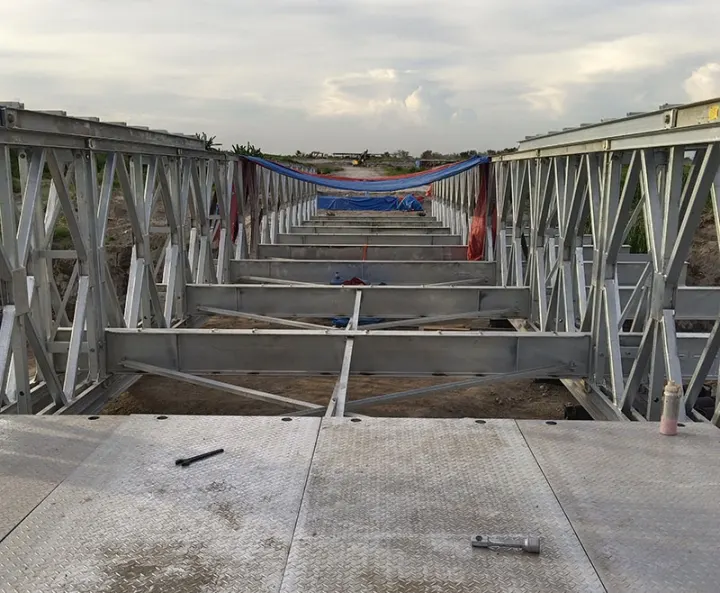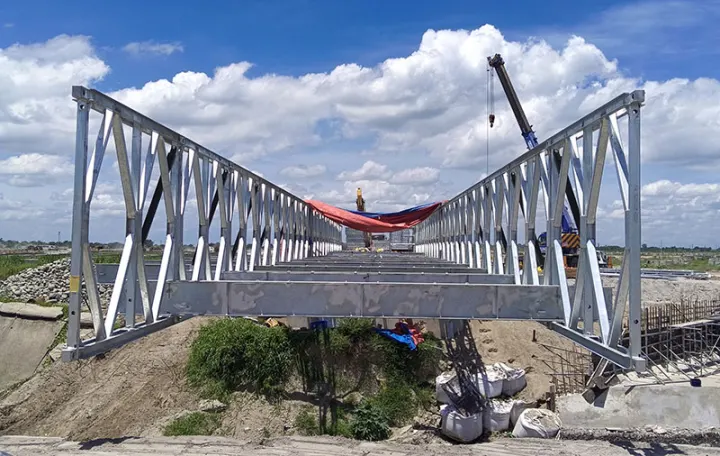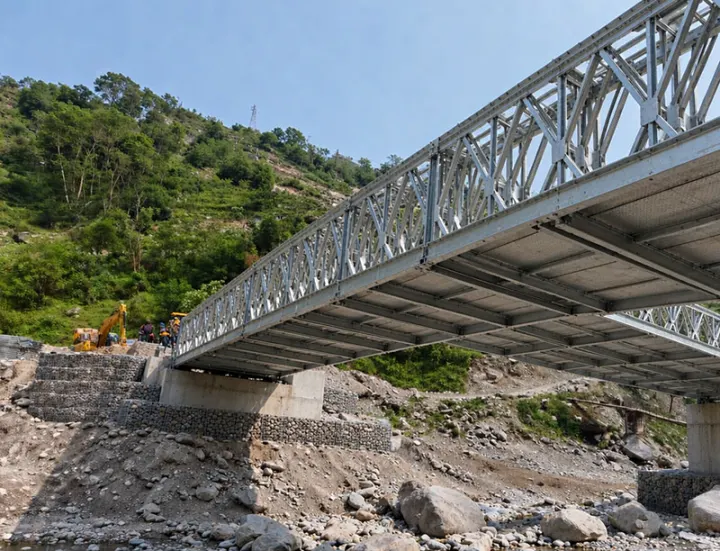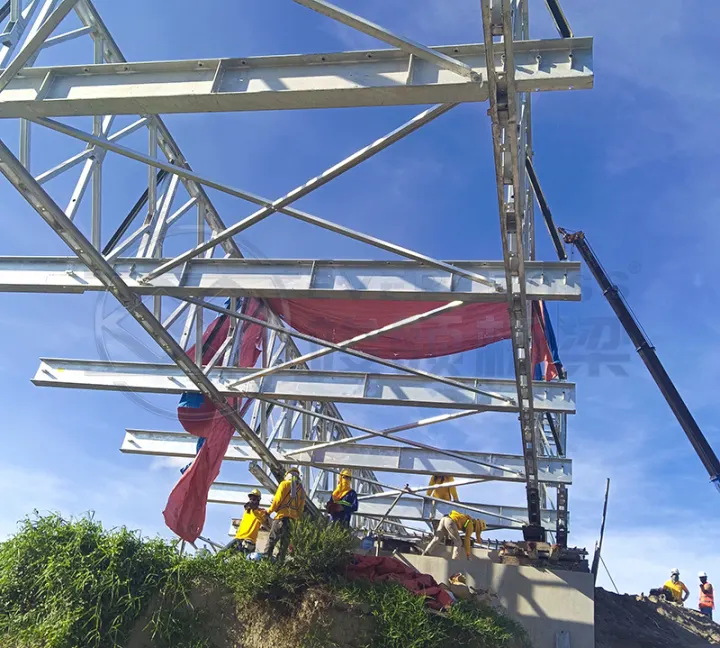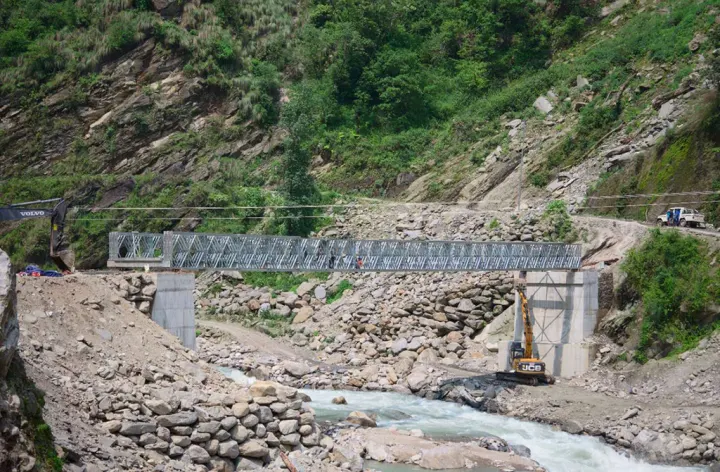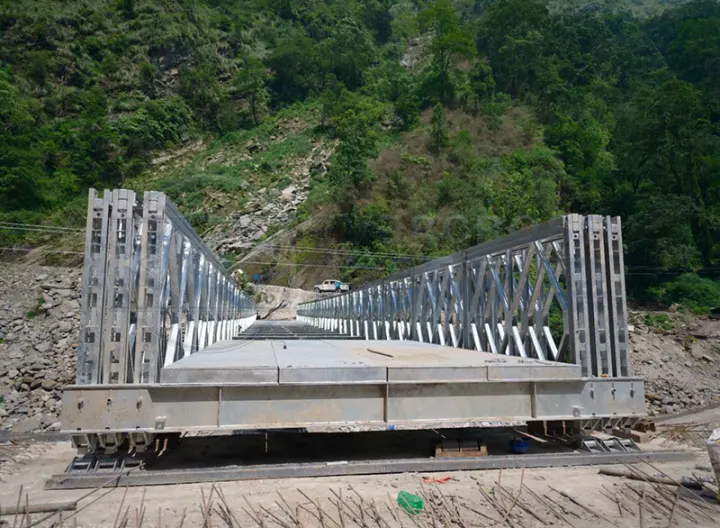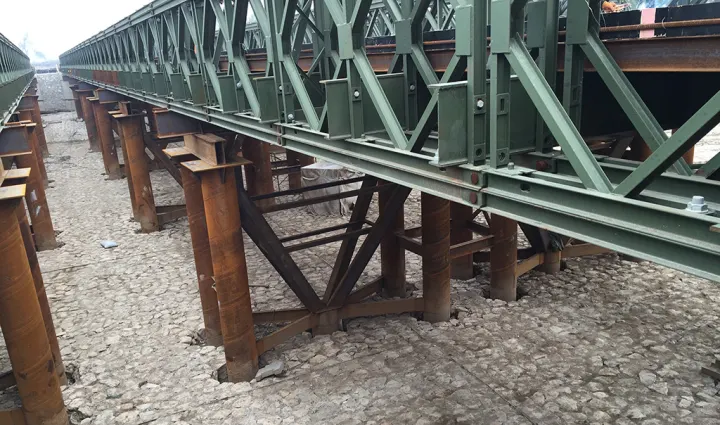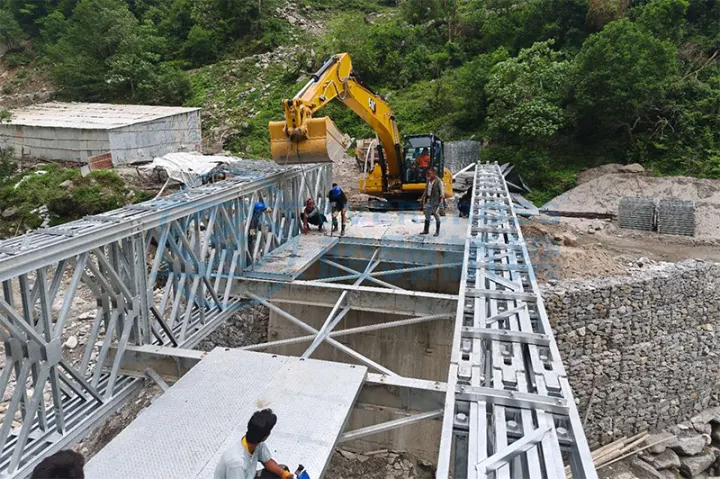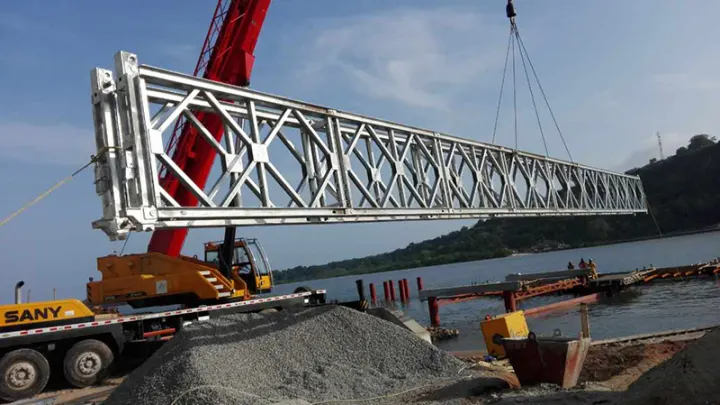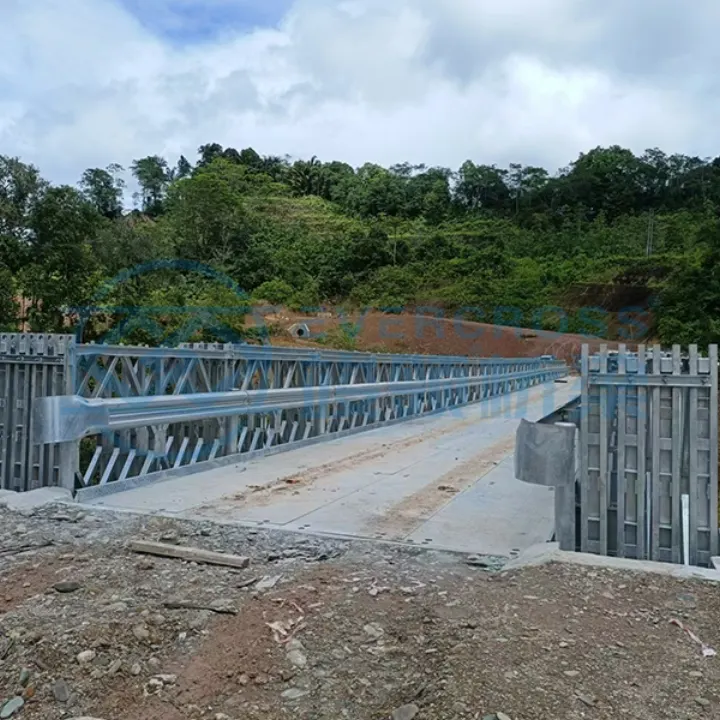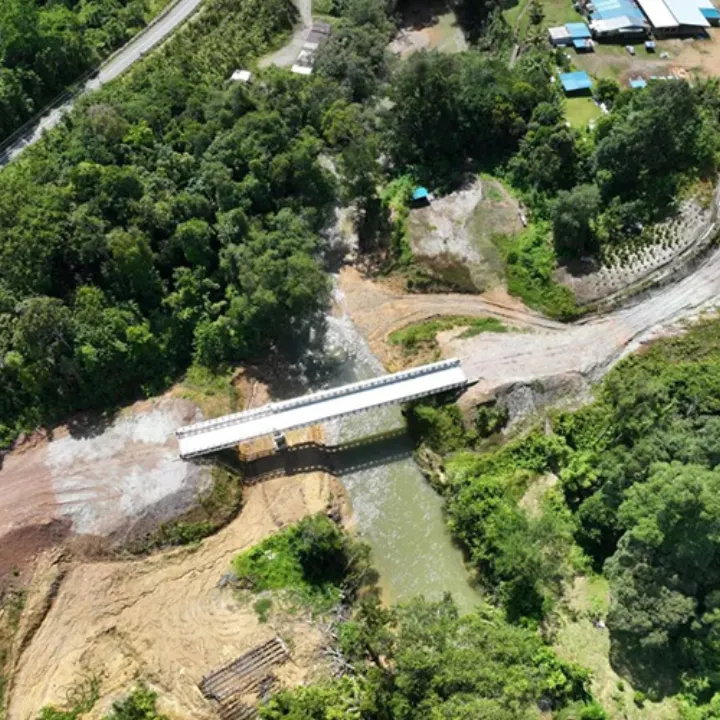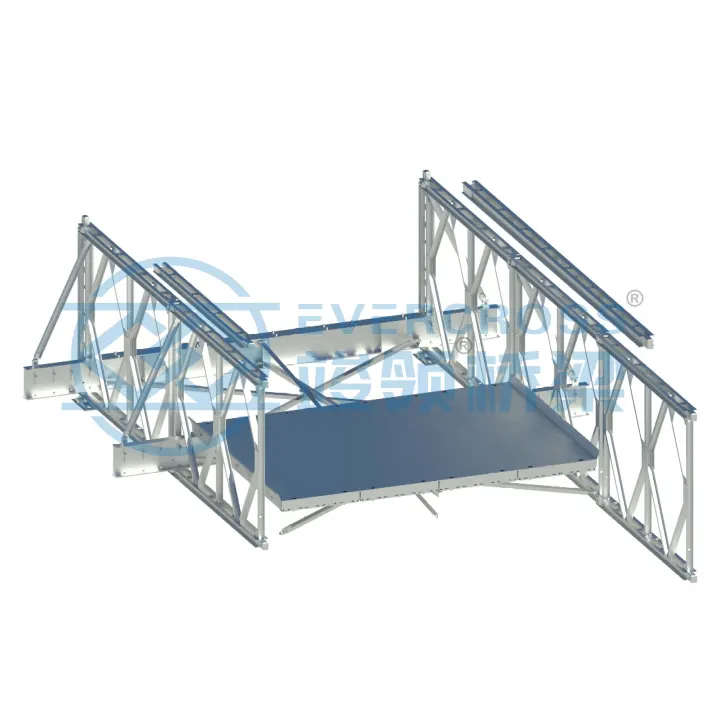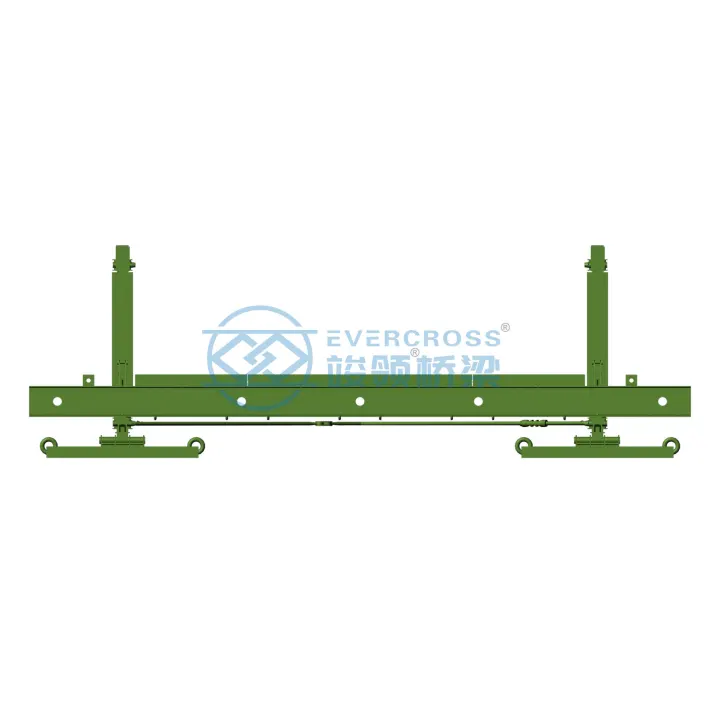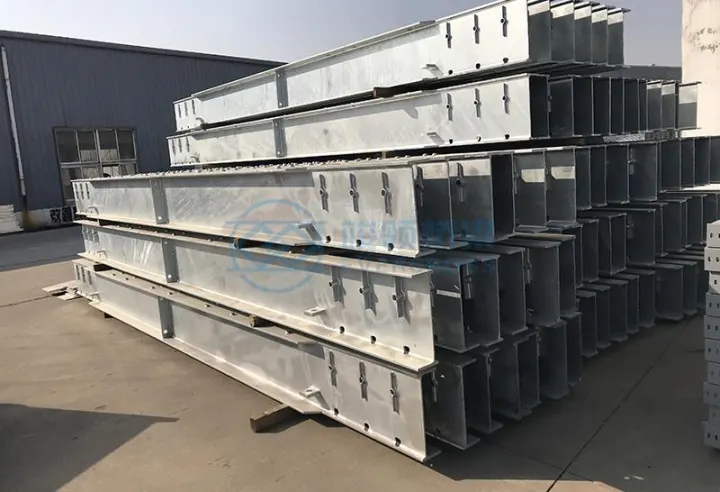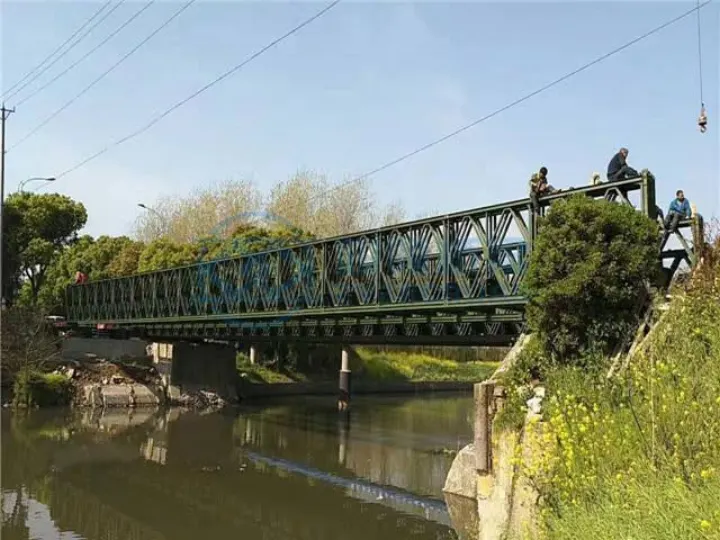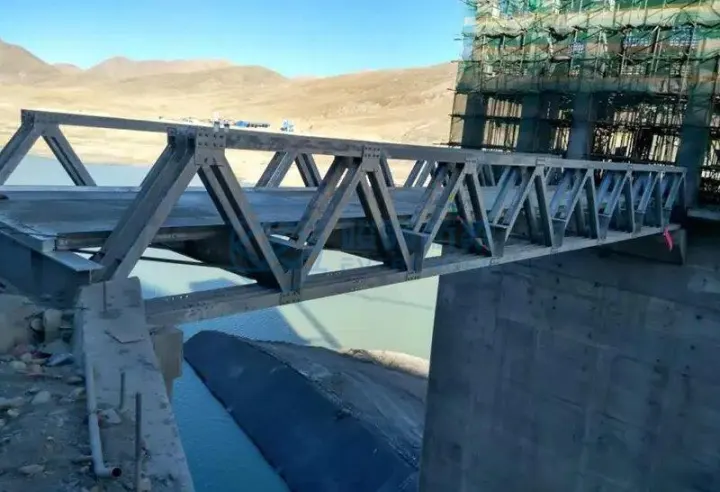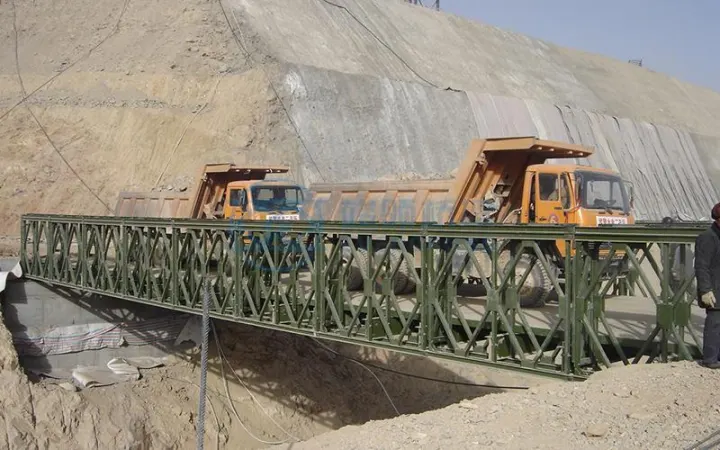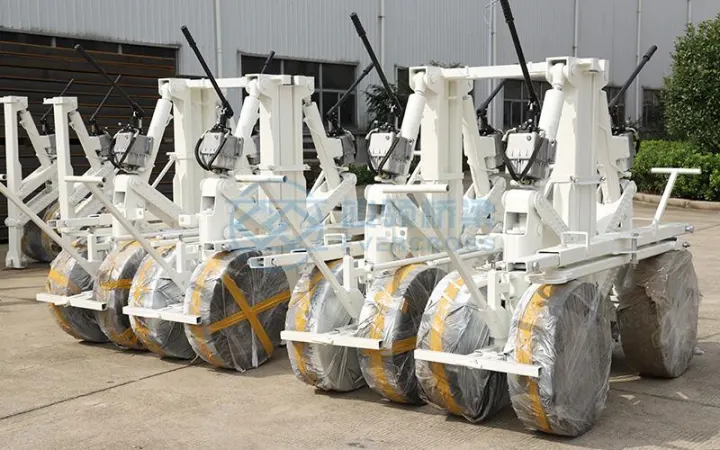
The Bailey panel system has been the default answer to “we need a bridge across this gap, quickly” since 1941. Sixty years of derivative designs later, the panel is still the same 3.05 m × 1.45 m welded-steel truss — what changed is the load class you can carry on it, the deck you put on top, and how fast a trained crew can launch it.
What actually decides a Bailey bridge design
Four variables fix everything else. Span determines the bending moment, and therefore the number of panels per truss and whether you need a second or third storey. Roadway width (one-lane 4.2 m, two-lane 7.35 m) sets the transverse beam length and the number of truss lines. Load class — HS20-44, HS25, or a national equivalent such as Class 60 or U012 — sets the panel count and the deck type. Finally, the launch method decides whether the bridge can be cantilevered over the gap or has to be built on falsework, which in a flood or a landslide site is usually not an option.
Get those four right and the bill of materials falls out. Get any one wrong and you either overbuild by 30 % or find out at load test that the centre panel is under-strength.
Panel count is not a matter of taste
A single-storey, single-panel truss carries roughly 12 t over a 30 m span. The same 30 m with triple truss and double storey carries a tracked excavator without a second thought. The difference is not the steel grade — it is the moment of inertia and the shear capacity at the panel points. Anyone quoting “a Bailey bridge for 40 m” without asking for the axle loads is quoting a shape, not a structure.
Deck, kerb and approach are where budgets move
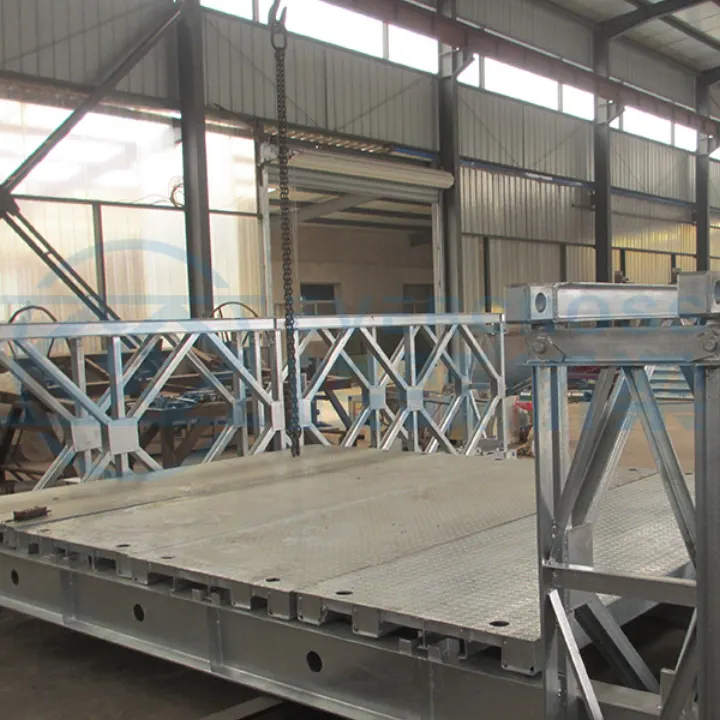
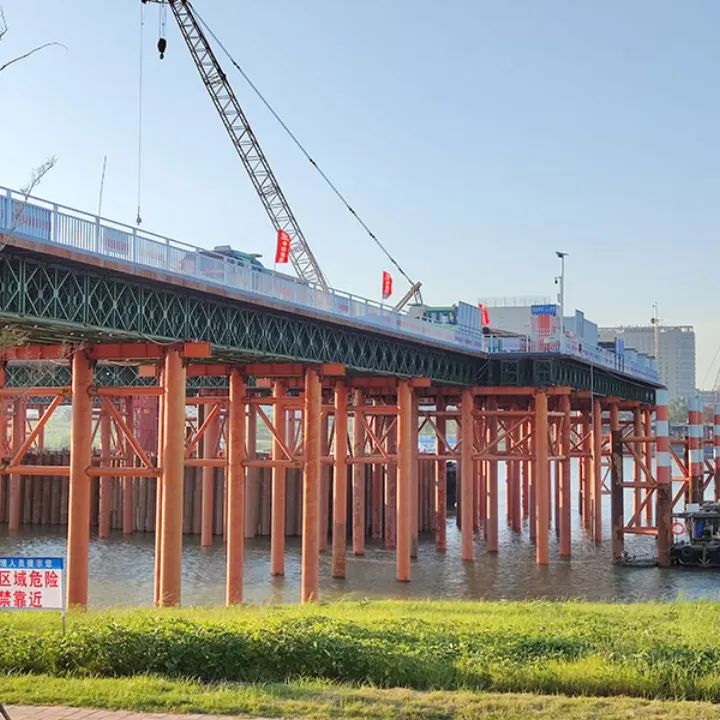
The truss is the visible cost. The deck is the one that surprises people: timber decking is cheap and fast but needs replacing; steel deck with a wearing course lasts decades and adds dead load you must design for; a concrete deck on a Bailey truss is usually a mistake unless the panel count is raised. Approach ramps, abutment preparation and drainage routinely account for a third of a delivered project — and they are the items most often left out of a first quotation.
Load classes we design to
One panel system, the full spectrum of international load standards: pedestrian loading at 5 kN/m²; road traffic from the 5 t passenger car through 10, 15 and 20 t light trucks and 30–40 t medium trucks up to 50, 60, 80 and 100+ t heavy trucks and mining haulers; military classes NATO STANAG MLC 80 and MLC 110; and national codes including BS 5400 HA+20HB / HA+30HB, AS 5100 SM1600, AASHTO HL-93, IRC Class 24 and Class 38. We design to the load standard of the market the bridge is delivered to — so it arrives already compliant with the authority that will inspect it.